


On this page
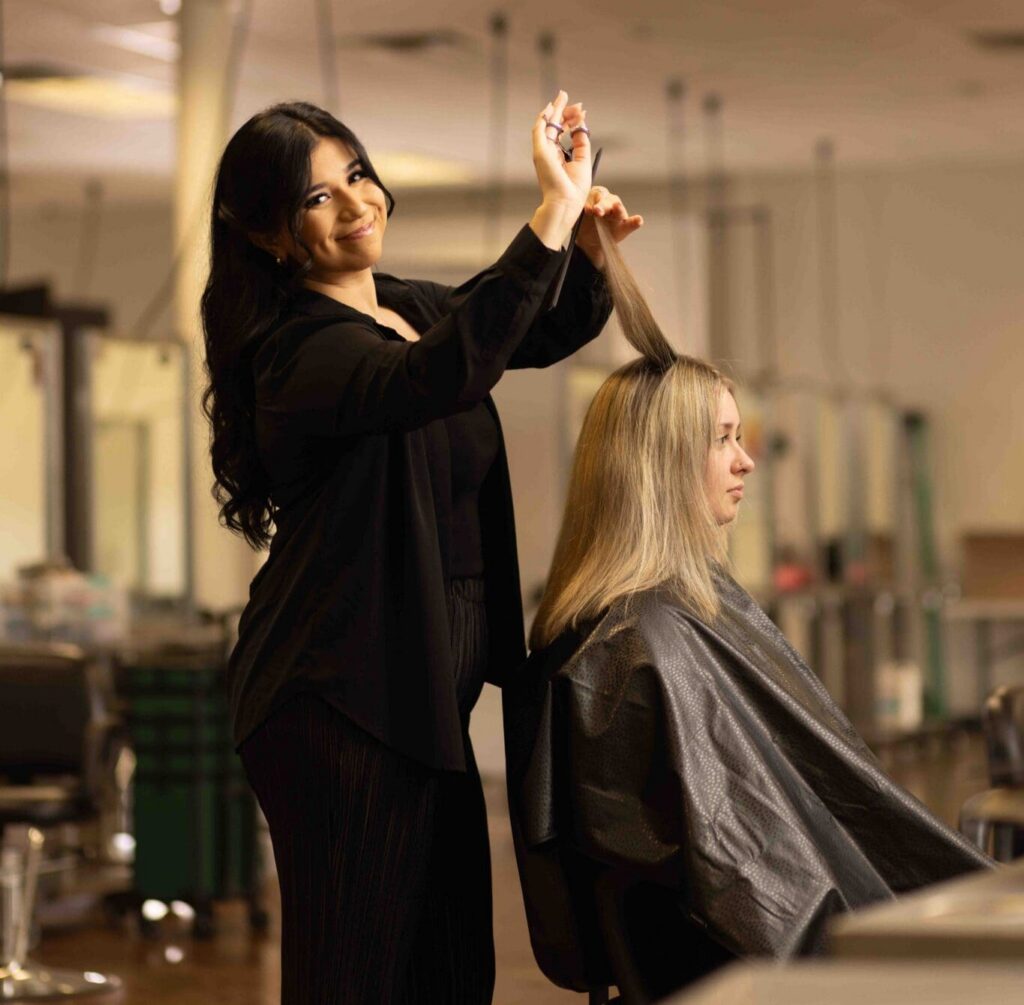
Cosmetology vs. Esthetics: Cosmetology focuses on hair, nails, and basic skincare, while esthetics specializes in advanced skincare treatments and skin health.
- Cosmetology: Hair cutting, coloring, styling, nails, and basic skincare
- Esthetics: Skin analysis, facials, hair removal, and specialized skincare treatments
So How Exactly Are They Different?
Cosmetology and esthetics are often confused, but they lead to distinct career paths within the beauty industry.
In school, aspiring Cosmetologists focus on learning the art of hair styling and color theory with a concentration on cutting, hair treatments, and color. The curriculum also encompasses permanent waving, chemical relaxing, hair extensions, eyelash extensions, nail technology, and esthetics, including basic facials and hair removal.
- Hair cutting, styling, and coloring
- Hair extensions
- Nail technology
- Basic skincare (facials, waxing)
- Chemical treatments (relaxers, perms)
Estheticians specialize in skin care. As an esthetician, you will have a deeper understanding of the skin’s anatomy and conditions. Esthetician services include skin consultations, a host of different types of facials, and special hair removal techniques.
- Skin analysis and conditions
- Advanced facial treatments
- Hair removal techniques (waxing, threading)
- Microdermabrasion and exfoliation
- Brow shaping and tinting
In 2026, esthetics has become one of the fastest-growing segments of the beauty industry due to demand for non-invasive skincare and wellness services.

Does Each Program Teach the Basics?
Cosmetology students learn the basics of skincare and maintenance along with the other general features of the program, such as hair cutting and coloring. Esthetics students learn to analyze and assess skin conditions, eyebrow shaping, waxing and tinting, microdermabrasion, reflexology, facial and body waxing practices and techniques, and more.
Both programs prioritize infection control, sanitation, and client safety, aligning with industry standards set by organizations like the CDC and state licensing boards.
Licensing Requirements
Licensing requirements vary by state, but most trade schools (which is what cosmetology and esthetics schools are) require that students be at least 17 years of age with a high school diploma or equivalent.
Check out your state’s licensing requirements before enrolling in any program.
The number of hours needed to complete the program depends on the amount of theory/lecture and practical/training required to satisfy the program requirements. Cosmetology programs often require between 1,000 and 2,400 hours to be completed to obtain a license, while most esthetics programs require around 600 hours. These numbers vary, and you should speak with an admissions representative if you have questions about this.
Typical Training Hours:
- Cosmetology: 1,000–1,500 hours
- Esthetics: 750–1,000 hours
Cosmetology or Beauty School
The terms “beauty school” and “cosmetology school” are often used interchangeably, but there are subtle differences.
- Beauty school: A broader, sometimes outdated term
- Cosmetology school: A more modern, standardized term for accredited training
Today, most “beauty schools” offer cosmetology programs, but not all offer comprehensive training or specialty programs like esthetics.
Key Tip for Students
Always verify that your program is:
- State-approved
- Offers hands-on training
- Prepares you for licensing exams
While the terms “beauty school” and “cosmetology school” are often used interchangeably, program offerings can vary significantly. Some beauty schools focus narrowly on hair and nails, while others offer broad curricula that include barbering, esthetics, and specialized coloring techniques.
Ultimately, a school’s name matters less than its accreditation and course offerings. As long as the program is accredited in your state, it will prepare you for the state licensing exam.
No matter your specific career goals, Ogle School in Texas is dedicated to your success. We offer comprehensive, hands-on training through our 1000-hour cosmetology program and 750-hour esthetics program, helping you find the right fit for your passion in the beauty industry.
What is the main difference between cosmetology and esthetics?
Cosmetology covers a broad range of beauty services, while esthetics focuses specifically on skincare and skin treatments.
Which career is better: cosmetology or esthetics?
It depends on your interests. You may choose cosmetology if you love hair and variety, or esthetics if you’re passionate about skincare and wellness.
How long does it take to become licensed?
At Ogle School, our cosmetology program typically take 7–13 months, while esthetics programs can take 5-10 months depending on the schedule.
Can a cosmetologist perform esthetic services?
Yes, but usually only basic services like facials and waxing—advanced treatments often require esthetician training.
Is esthetics in demand in 2026?
Yes, skincare is one of the fastest-growing sectors in beauty, driven by wellness trends and non-invasive treatments.