


On this page
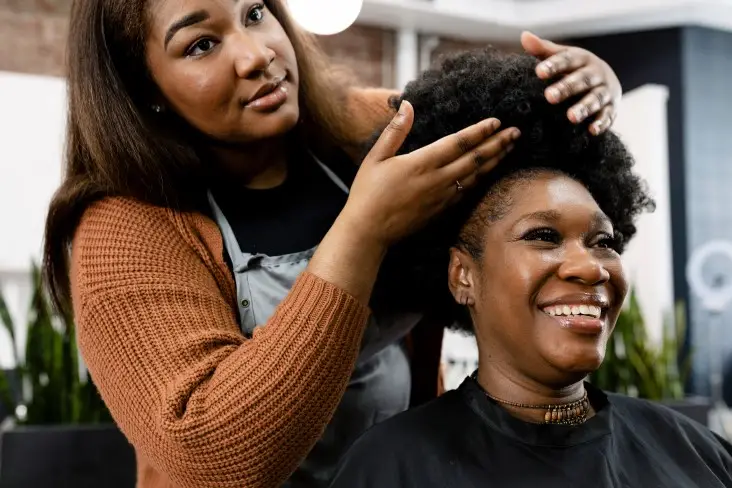
How often should you cut your hair? For most people, a trim every 6 to 12 weeks is a good place to start. But the right timing depends on your hair length, style, texture, condition, and your goals. Short, precision haircuts usually need upkeep sooner because a little growth changes their shape. If you’re growing your hair longer and your ends are in good condition, you can often wait longer between appointments.
The schedule below gives you a quick reference. From there, the state of your ends will guide you better than a calendar.
Hair Trimming Schedule by Length and Hair Type
Haircut frequency depends on your hairstyle and your hair’s condition. Treat these intervals as starting points, not strict deadlines.
| Hair Type / Length | Suggested Trim Frequency |
| Short hair/pixie cuts | Every 4–6 weeks |
| Medium-length hair | Every 6–12 weeks |
| Long, healthy hair | Every 8–12 weeks |
| Fine hair | About every 4–12 weeks, depending on length and condition |
| Thick hair | About every 8–12 weeks |
| Curly or coily hair | Often every 6–12 weeks, depending on condition and styling goals |
| Damaged or heavily processed hair | Varies by person; more frequent trims may help |
If your ends look healthy and your style still holds its shape, you can usually stretch the time between visits. If you spot damage, you may want to book sooner.
How Often to Trim Short, Medium, and Long Hair
With long hair, a few weeks of growth doesn’t change your look much. The opposite is true with short styles. Trim timing depends closely on hair length.
Short Hair: Maintaining Shape and Definition
Pixie cuts, short bobs, and other precision styles depend on clean lines. Even a little growth can soften the edges or throw off the balance around your ears and neckline. For styles like these, trim about every 4 to 6 weeks to keep the cut looking the way it did when you left the salon.
Medium-Length Hair: Balancing Shape and Growth
Medium-length hair gives you more flexibility. Around 6 to 12 weeks is a useful range, but your style plays a big part. Layered cuts can lose their movement as layers grow out, and bangs may start hitting your eyes within a few weeks. Some people book a quick bang trim between full appointments.
Long Hair: Protecting the Ends
So, how often should you trim long hair? If it’s healthy, about every 8 to 12 weeks is a common starting point. The ends of long hair are the oldest part of each strand, and they’ve been through months of brushing, washing, and styling. Watch for split ends, tangling, dryness, and breakage. Keeping those ends in good shape is what lets you hold on to the length you’ve grown.
Trimming Frequency for Different Hair Textures
Texture affects how damage shows up and how a cut holds its shape. These notes can help you and your stylist build a schedule that fits your hair.
Fine Hair
Fine hair has thinner strands, so split ends and uneven ends tend to show more easily. When the ends get thin and wispy, the whole length can look sparse. Regular trims help keep the ends looking full and the shape crisp.
Thick Hair
For thick hair, trim timing depends on your style, density, and condition. A heavy cut may start to feel bulky or lose its shape as it grows. With so much hair, damaged ends in the lower layers can also be harder to spot, so it helps to have a stylist check underneath.
Curly and Coily Hair
Curly and coily hair often shrinks as it dries, so it can look much shorter than its stretched length. That shrinkage can hide how much your hair has grown, and it can also hide dry or damaged ends. Trims help keep your curl pattern defined and the overall shape even. Textured hair varies widely from person to person, so the best schedule is built around your curls, your styling routine, and the health of your ends. A stylist who works with natural hair can help you find that rhythm.
Color-Treated or Chemically Processed Hair
Bleached, color-treated, or chemically processed hair, such as relaxed or permed hair, can be more fragile, especially when you use heat styling. If your ends feel dry, rough, or stretchy, check them more often. Your stylist may suggest small, frequent trims to remove weak ends before they start to break.
How Often Should You Trim Hair When Growing It Out?
When you’re growing your hair longer, let the condition of your ends guide you instead of cutting every few weeks automatically. For fairly healthy hair, about every 8 to 12 weeks is a reasonable starting point, and some people can go longer. Many people ask how often to trim when growing hair out, and the answer depends on checking your ends regularly for splits and breakage.
Hair grows from follicles in your scalp, and cutting the ends doesn’t change that process. If you’re wondering how often to trim hair for maximum growth, remember that trims don’t speed up growth at the root. They can help you keep more of the length you grow.
That’s the difference between hair growth and length retention. Growth is how much new hair comes from your scalp. Retention is how much of that hair stays on your head instead of breaking off. A split end can keep splitting farther up the strand, and the weakened hair is more likely to snap. When that happens, you lose length you worked hard to grow.
Timing matters in both directions:
- Cutting too much, too often can cancel out your progress, since you may be removing as much as you grow.
- Postponing trims when your ends are already damaged can cost you more length in the long run than a small trim would have.
Growing out your hair is about supporting healthy growth and protecting the length you already have. A light trim or dusting, explained below, can help you do both.
Signs It’s Time for a Haircut
Many people ask, “How often should I trim my hair?” A schedule is useful, but your hair also gives you signs:
- Split ends you can see
- More tangling than usual, especially near the ends
- Ends that feel brittle, rough, or frayed
- Strands snapping more often when you brush or style
- A cut that no longer holds its intended shape
- Layers or bangs that are hard to style
- Ends that look uneven or noticeably thinner than the rest of your hair
One sign doesn’t always mean you need a cut right away. Common causes include tight hairstyles, rough brushing, bleach or relaxers, shampoo or styling products that leave your hair dry, or frequent heat styling done without a heat protectant.
If the damage is at your ends, a trim will remove it. If strands are breaking higher up, a light trim won’t reach the damage. A shorter cut can remove it, and a stylist can help you find the cause so the breakage doesn’t continue.
Hair Trims vs. Haircuts: Understanding Your Options
Knowing the difference between a trim, a haircut, and a dusting helps you ask for what you want at the salon.
Hair Trim vs. Haircut vs. Hair Dusting
- Hair trim: Takes off a small amount of length to keep your current style and clean up damaged or uneven ends.
- Haircut: Changes the length, shape, or style, such as adding layers or switching to a bob.
- Hair dusting: Removes only tiny bits of visibly damaged ends while keeping as much length as possible.
The right choice depends on your hair’s condition, how you like to style it, and whether you want to keep your look or change it.
Professional Haircuts vs. At-Home Trimming
A professional hairstylist can assess your hair’s texture and condition up close, then use tools and techniques to keep your shape even and your length consistent. That matters most for layered cuts, textured hair, and precision styles, where small mistakes are easy to see.
At-home trimming can work for minor touch-ups, like keeping bangs out of your eyes. You’ll need sharp hair-cutting scissors, not kitchen or craft scissors, and a careful hand. Without the right technique, it’s easy to cut unevenly or remove more than you intended.
For a precise style or noticeable damage, a salon visit is usually the better choice. Small touch-ups at home can be manageable if you have the right tools and take your time.
How to Keep Your Hair Healthy Between Trims
A steady, healthy hair routine means each trim has less damage to remove. These habits can help protect your hair from breakage between appointments:
- Choose shampoo and conditioner made for your hair type.
- Cut back on heat styling when you can.
- Apply a heat protectant before using hot tools.
- Detangle gently, starting at the ends, especially when your hair is wet.
- Try deep conditioning treatments if your hair is dry, colored, or chemically processed.
- Avoid tight styles that pull hard on your hair. Protective hairstyles can help, as long as they aren’t too tight.
- Reduce friction with a satin or silk pillowcase or scarf.
- Look over your ends every few weeks.
Learn Professional Haircutting Techniques at Ogle School
Knowing when hair needs a trim, and how much to take off, is a skill professional stylists build through training and practice. In Ogle School’s cosmetology training program, students learn:
- Haircutting techniques for different lengths and styles
- Hair and scalp analysis
- How to work with different hair textures
- Client consultations
- How to help clients maintain their hairstyles
- Hair care product knowledge
- Hands-on practice in a salon setting
These skills help future stylists give clients advice that fits their hair, not a one-size-fits-all schedule.
Explore Cosmetology Training at Ogle School
If you like working with hair and helping people find a look that suits them, cosmetology could be a good fit. Ogle School has campuses across Texas and Georgia, and our team can explain the admissions process and financial aid resources for those who qualify. Request information to learn more about classes and start dates.
FAQ
Is trimming half an inch enough to remove split ends?
It can be, if the splits are only in the last half inch of your hair. Splits can travel higher up the strand over time, though, so you may need to remove more. A stylist can check where the damage stops and cut just above it.
Should you cut your hair when it’s wet or dry?
It depends on your hair type and the cut. Stylists often cut straight hair wet because damp hair lies flat, which makes clean, precise lines easier. Stylists often cut curly and coily hair dry so they can see how each curl falls. Some stylists use both methods in the same appointment.
What happens to split ends if you go a year without trimming your hair?
A year gives split ends plenty of time to travel up the hair shaft. Those weak sections tangle and snap more easily, leaving your ends looking thin, frizzy, or uneven. When you finally get a trim, your stylist may need to cut more length than a regular trim would have.