


On this page
At a Glance
How long is cosmetology school in Texas? Texas requires 1,000 training hours for a cosmetology operator license. At Ogle School, that works out to roughly 7 months full-time or 13 months part-time. After your hours, you must pass a written and a practical exam, so your total time to licensure runs a little past your last day of class. The esthetics program is shorter, requiring 750 hours and typically completing in 5 months full-time or 10 months part-time. Schedule, attendance, exam timing, and program type all affect total time to licensure. Our programs run Monday through Friday with flexible morning and evening options, so students can pursue their license without putting the rest of their life on hold.
Updated: Nov 2026
View: 5 Minute Read
How long is cosmetology school?
In Texas, the cosmetology operator license requires 1,000 training hours. At Ogle School, that typically translates to approximately 7 months full-time or 13 months part-time, depending on your schedule and successful progress toward requirements. That means cosmetology school takes less than a year if you attend full-time, and a little over a year if you attend part-time around work or family.
Whether you search for cosmetology school, beauty school, or hair school, you are looking at the same path: complete the required hours at a TDLR-approved cosmetology school, then pass the state exams.
If you’re exploring a career in cosmetology or esthetics, start by requesting info and a quick conversation with an Ogle School Admissions Advisor. They’ll walk you through programs, schedules, and financing options.
Prefer skin care? Ogle School’s Esthetics Program provides an accelerated path (often 5 months full-time or 10 months part-time) to a skin-focused career.
Quick comparison of Ogle School program lengths:
| Program | Required hours | Full-time | Part-time |
|---|---|---|---|
| Cosmetology | 1,000 | ~7 months | ~13 months |
| Esthetics | 750 | ~5 months | ~10 months |
How Long Does it Take to Complete a Cosmetology Program?
Texas requirement: The Texas Department of Licensing & Regulation (TDLR) sets 1,000 cosmetology school hours for the Cosmetology Operator course, followed by written and practical exams. Some older articles still cite 1,500 hours, but TDLR’s current requirement is 1,000.
The length of the program will depend on a student’s flexibility and how much time they can devote to school. Full-time students with successful completion of their requirements will finish faster than part-time students.
From First Class to Licensed: Your Texas Cosmetology Licensing Timeline
Finishing your hours is a big milestone, but it is not the last step. Here is how the licensing process generally works in Texas, based on TDLR’s current requirements. Applicants must be at least 17, and TDLR’s website always has the latest details.
| Step | What happens | Timing |
|---|---|---|
| 1. Complete your training hours | Train for 1,000 hours at a TDLR-approved school | About 7 months full-time or 13 months part-time at Ogle School |
| 2. Become eligible for the written exam | After 900 hours, your school notifies TDLR | Before your final hours are done |
| 3. Pass the written exam | Administered through PSI | Scheduled once you are eligible |
| 4. Pass the practical exam | Available after you complete all 1,000 hours and pass the written exam | After your hours are complete |
| 5. Apply to TDLR | $50 non-refundable application fee and a background check; applicants with certain convictions complete a questionnaire | TDLR review times vary |
| 6. Receive your license | A temporary license can print after you pass the practical exam, good for 60 days while your two-year license is mailed | Varies with exam scheduling and TDLR processing |
For a full walkthrough, read our guide to Texas cosmetology license requirements. Want to talk through your own timeline? Call 888-820-4224 or schedule an interview with an admissions advisor.
What Affects How Long Cosmetology School Takes?
Beyond the schedule you choose, two things can change your timeline:
- Attendance and progress: Hours count when they are completed, so missed time generally needs to be made up. Consistent attendance keeps you on track.
- Your start date: Class start dates vary, so ask an admissions advisor about the next start for your campus and schedule.
Scheduling Options (Full‑Time vs. Part‑Time)
Attending full-time is ideal if you’re eager to start your career and can afford to devote yourself to completing your work. All students are offered flexible scheduling.
While the full-time Cosmetology program can take seven months to complete, the part-time Cosmetology program usually takes 13 months. Ogle School offers three cosmetology schedule options. Both full-time and part-time programs run Monday through Friday, so your weekends stay free.
| Schedule | Days and times | Approximate length |
|---|---|---|
| Full-time (fast track) | Monday-Friday, 9:00 AM-5:00 PM or 1:30 PM-9:30 PM | About 7 months |
| Part-time morning | Monday-Friday, 9:00 AM-12:30 PM | About 13 months |
| Part-time evening | Monday-Friday, 6:00 PM-9:30 PM | About 13 months |
Schedule availability can vary by campus, so confirm options with your campus admissions team.
Which pace fits you?
- Choose full-time if you can commit to a daytime or afternoon-evening schedule and want the shortest path to your exams.
- Choose part-time if you are working, caring for family, or need a smaller weekly time commitment.
Compare campus schedules on our cosmetology program page.
See what you’ll learn.
From precision haircutting to advanced color techniques, Ogle School’s cosmetology curriculum covers everything you need for licensure and beyond.
VIEW THE FULL CURRICULUMWhat You Learn (Skills & Confidence)
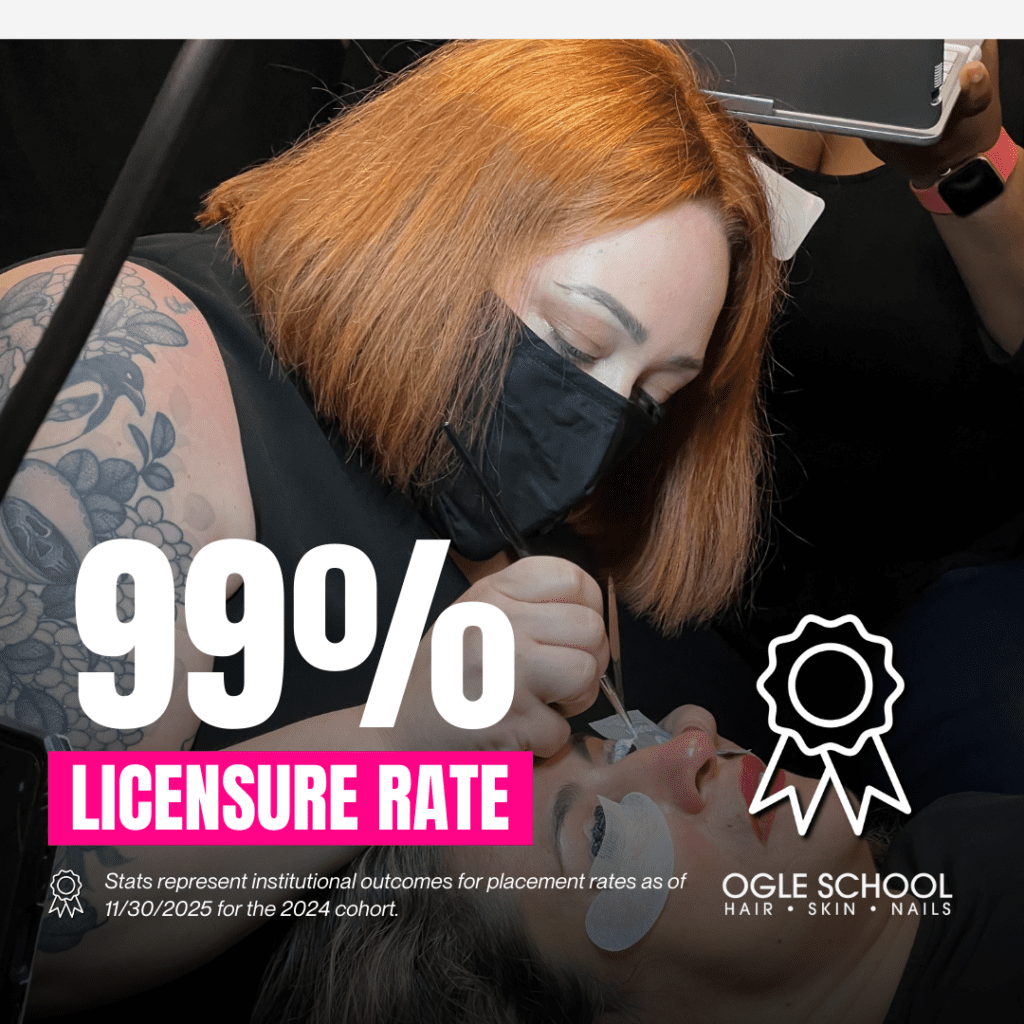
Expect comprehensive training in haircutting & design, hair color and chemical services, styling, skin & nail fundamentals, sanitation and safety, state‑board readiness, and salon business basics—aligned with Texas standards.
Expert insight from Ogle School: “The key to any great hairstyle starts with understanding your hair’s unique needs,” says Stanley Nolan, Ogle School’s Veteran Cosmetologist & Beauty Education Specialist—reinforcing the program’s emphasis on personalized consultation and technique.
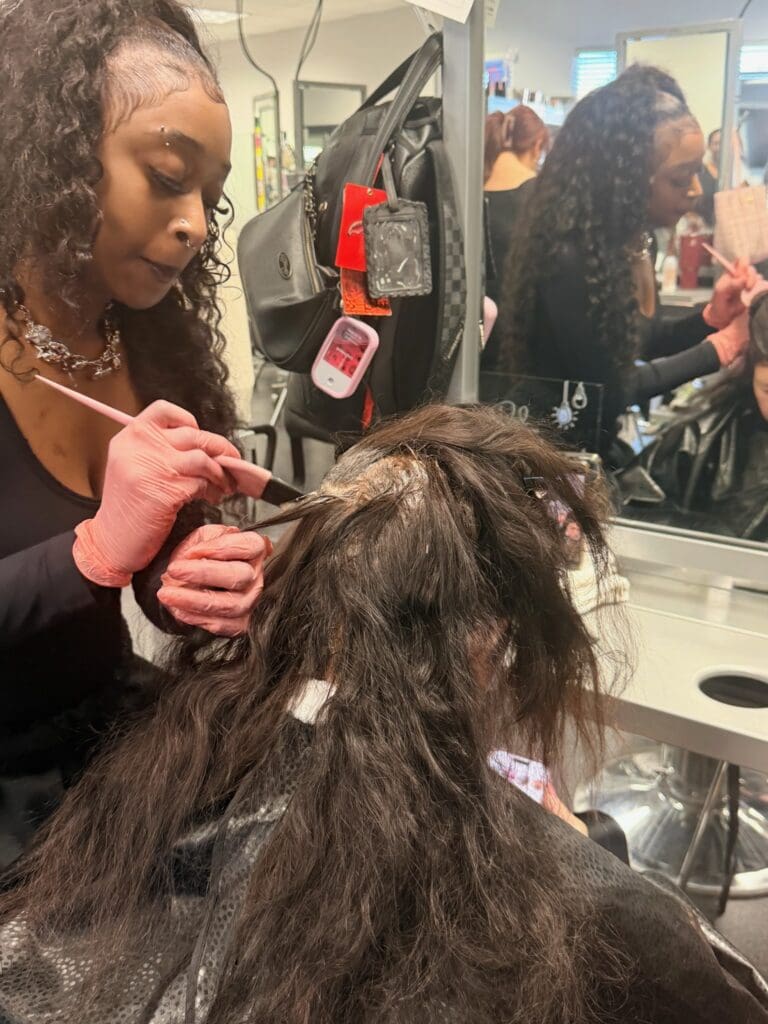
Hands‑on practice happens in student powered salon‑modeled clinics with licensed instructors, bridging classroom theory to real client services. (Cosmetology Program Overview)
How Much Does Cosmetology School Cost in Texas?
Cosmetology tuition at Ogle School’s Texas campuses is $15,700 for the 2026-2027 award year, and it is the same whether you choose a full-time or part-time schedule. Books, supplies, and living expenses are estimated separately, so see the full 2026-2027 Cost of Attendance for details. Financial aid, scholarships, and flexible payment plans may be available for those who qualify. You can estimate your out-of-pocket cost with our Net Price Calculator, or talk to an advisor to explore your options.
Admissions Guidance
Ready to start? Here is how enrolling at Ogle School works.
Getting started is simple:
- Speak with an Admissions Advisor
- Complete the enrollment application
- Meet with a Financial Aid Advisor to review aid you may qualify for
- Attend orientation before your first class
Here are some standard topics covered by an admissions or financial aid advisor when they speak with you after you’ve submitted your information request:
- Which Program is Right For You? (Cosmetology or Esthetics)
- Program Schedule Options
- Scholarship and Financial Aid Information for those who qualify
Financial aid, scholarships, and funding resources are available to those who qualify; explore FAFSA codes, grant/loan overviews, and scholarship links on Ogle’s financial aid hub. For transparency details, review Student Consumer Information. Call 888-820-4224 or schedule an interview to get started.
Careers in Beauty
On your way to earning a cosmetology license, you’ll learn hair cutting, hair care, coloring, skin care basics, and nail care fundamentals. Many graduates pursue paths such as:
- Hair Stylist
- Colorist
- Salon Owner
- Makeup Artist
- Platform Artist / Educator
Industry outlook remains healthy: the U.S. Bureau of Labor Statistics projects approximately 7% employment growth (2025–2035) for barbers, hairstylists, and cosmetologists, faster than the average for all occupations.
Whether you want to style hair, specialize in color, or run your own salon, you’ll receive hands-on training at Ogle School designed to help you prepare for the state exams and the next step in your career.
Ogle School Campus Locations
Ogle School has nine campuses in Texas and two in Georgia. Each campus is approved by the Texas Department of Licensing and Regulation. Ogle School’s accredited cosmetology schools are located in the following cities:
Each of our campuses offers financial aid to those who qualify, for attending cosmetology school. Our curriculum is comprehensive, and the education hours that students will dedicate themselves to will help prepare them for promising careers as cosmetology professionals.
Having a quality education with customer service skills that you will refine practicing in our salon-modeled campuses will give you an advantage.
Ask our staff about financial aid and student loans for more affordable education options. If you’re currently attending public school, consult your counselor on cosmetology education classes and credit hours.
FAQs
Texas requires 1,000 hours of training at a licensed school for a cosmetology operator license, plus passing the written and practical exams. At Ogle School, that is about 7 months full-time or 13 months part-time. Your school reports your hours to TDLR, and you can become eligible for the written exam once you reach 900 hours.
Your timeline is the time it takes to complete your 1,000 hours (about 7 months full-time or 13 months part-time at Ogle School), plus the time to pass the written and practical exams and for TDLR to process your application. Timing varies with exam availability, so ask your advisor how to plan ahead.
A Texas cosmetology operator license is valid for two years from the date it is issued, and it must be renewed to stay active. Check TDLR for current renewal requirements.
People use the terms interchangeably. At Ogle School, our cosmetology program covers hair, skin, and nail care fundamentals and prepares you for the Texas cosmetology operator license, with the same 1,000-hour requirement.
No. In Texas, a cosmetology operator license is based on completing the required training hours at a licensed school, passing the written and practical exams, and meeting TDLR’s minimum age of 17, not on earning a college degree.
The cosmetology program is the same 1,000 hours whether your interest is hair, skin, or nails. Ogle School’s cosmetology program includes nail care fundamentals, but it is not a nail-technician-only program. Texas has a separate manicurist license with its own requirements set by TDLR.
Demand is projected to grow. According to the U.S. Bureau of Labor Statistics, employment for barbers, hairstylists, and cosmetologists is projected to grow 5% from 2024 to 2034, which is faster than the average for all occupations.
In Texas, you generally cannot work in a salon performing hair, skin, or nail services for pay unless you hold the appropriate state license.
~7 months full‑time or ~13 months part‑time, depending on your schedule and progress.
Common paths include hairstylist, salon owner/manager, colorist, makeup artist, platform artist/educator, and more; industry growth is projected at ~5% (2024–2034).
Cosmetology school tuition varies by program and school. At Ogle School, cosmetology tuition at our Texas campuses is $15,700 for the 2026-2027 award year, the same for full-time and part-time schedules. Federal financial aid, scholarships, and payment plans may be available to qualifying students. Visit Ogle School’s financial aid page for details on FAFSA, grants, and scholarship opportunities.
Ogle School offers both full-time and part-time cosmetology programs. The full-time program runs approximately 7 months, while the part-time program takes about 13 months. Both options are scheduled Monday through Friday with morning and evening availability, keeping weekends free. Full-time is the quickest route; your actual pace depends on attendance and progress, since missed hours generally need to be made up.