

On this page
If you want to work as a skincare professional in Texas, you need a license. An esthetician license proves you have the training and knowledge to perform facials, waxing, and other skin care services safely. The Texas Department of Licensing and Regulation (TDLR) is the state agency that sets and enforces these rules, and it’s illegal to offer esthetic services professionally in Texas without meeting them.
This guide walks through what it takes to become a licensed esthetician in Texas, including the education you need, how many training hours are required, how long the process takes, and what a license lets you do once you have it.
What Are the Texas Esthetician License Requirements?
To become a licensed esthetician in Texas, you must complete a state-approved esthetics program, meet basic eligibility rules, pass both required licensing exams, and submit an application to TDLR. Each piece has its own details, which we’ll cover later in the blog, but together they make up the full path to licensure.
Eligibility comes down to a few baseline rules: you generally need to be at least 17 years old and have a high school diploma or GED. Your training also has to come from a school licensed by TDLR. Online-only programs don’t meet this standard, since Texas requires hands-on, in-person instruction for the practical side of the work.
How Do You Become an Esthetician in Texas?
Becoming an esthetician in Texas means moving through a defined sequence: enroll in an approved program, complete your training, pass your exams, and apply for your license. Each step builds on the one before it, so skipping ahead isn’t an option.
Here’s what the process looks like in order:
Step 1: Enroll in a state-approved esthetics program. Look for a school licensed by TDLR, such as Ogle School’s esthetics training program.
Step 2: Complete your education and hands-on training. This includes classroom instruction and supervised practice with real clients. Your school reports your completed hours to TDLR once you finish.
Step 3: Pass your licensing exams. Texas requires both a written and a practical exam before you can move forward.
Step 4: Apply for your Texas esthetician license. Submit your application, exam results, and fees to TDLR for review. Once approved, you can start working legally anywhere in the state.
How Many Hours Are Required for an Esthetician License in Texas?
Texas requires 750 clock hours of training at a TDLR-approved school before you’re eligible for an esthetician license. This number is set by state law and applies no matter which school you attend, though your school’s specific schedule will affect how those hours are broken down.
Those hours typically cover a few different areas of learning:
- Classroom instruction: skin theory, sanitation, product knowledge, and Texas law as it applies to esthetics.
- Practical training: hands-on techniques practiced under instructor supervision.
- Student salon experience: working with real clients in a supervised setting, which helps build confidence before you’re licensed.
Because training requirements can be updated, it’s smart to confirm the current hour count directly with TDLR before you enroll anywhere.
How Long Is Esthetician School in Texas?
How long esthetician school takes depends mainly on whether you attend full-time or part-time. A full-time schedule generally gets you through the 750 required hours faster, while part-time programs stretch the same coursework over a longer period to fit around work or family obligations.
Full-time students often complete their training in about five months, while part-time students, attending fewer hours per week, typically take closer to ten months. Your actual timeline can shift based on how consistently you attend class, whether you take breaks between terms, and how your specific school structures its schedule.
Other factors that can affect completion time include make-up sessions for missed hours, holiday breaks, and how quickly you move through hands-on skill checkpoints.
Do You Need to Pass an Exam to Become a Licensed Esthetician in Texas?
Yes. You must pass both a written and a practical exam before Texas will issue your esthetician license. These exams confirm that you understand the material from your training and can perform the required techniques safely and correctly.
The written portion tests your knowledge of topics like sanitation, skin science, and state regulations. The practical portion has you demonstrate real skincare techniques, so examiners can see that your hands-on ability matches your book knowledge. Both parts have to be passed before your license application can move forward. Passing the exams is a requirement for licensure, though it doesn’t guarantee approval on its own, since TDLR still reviews your full application.
What Services Can a Licensed Esthetician Perform in Texas?
Licensed estheticians in Texas can legally provide a range of skincare services within the state’s approved scope of practice, including facials, skin analysis, hair removal, makeup application, and skincare consultations. Common examples include:
- Facials and other skin treatments
- Skin analysis and consultations
- Waxing and temporary hair removal
- Makeup application
- Light exfoliation and superficial peels
Some services, like deeper chemical peels or laser treatments, fall outside standard esthetics training and require additional oversight. Since scope of practice can change, check current TDLR regulations if you’re unsure whether a specific service is covered under your license.
What Is the Difference Between an Esthetician and a Cosmetologist?
Estheticians specialize in skincare, while cosmetologists train more broadly across hair, skin, and nails. Both are licensed professionals in Texas, but their education and day-to-day work look different.
An esthetician’s training centers on facials, skin analysis, hair removal, and related treatments. A cosmetologist’s training covers the same skin basics but also includes hair cutting, coloring, chemical services, and nail care, which means significantly more hours of school. If you’re drawn specifically to skin care and want to specialize early, esthetics is usually the more direct route. If you want a broader set of services to offer, cosmetology casts a wider net. You can read more about the differences in our Texas cosmetology license requirements guide.
How Ogle School Helps Prepare Future Estheticians
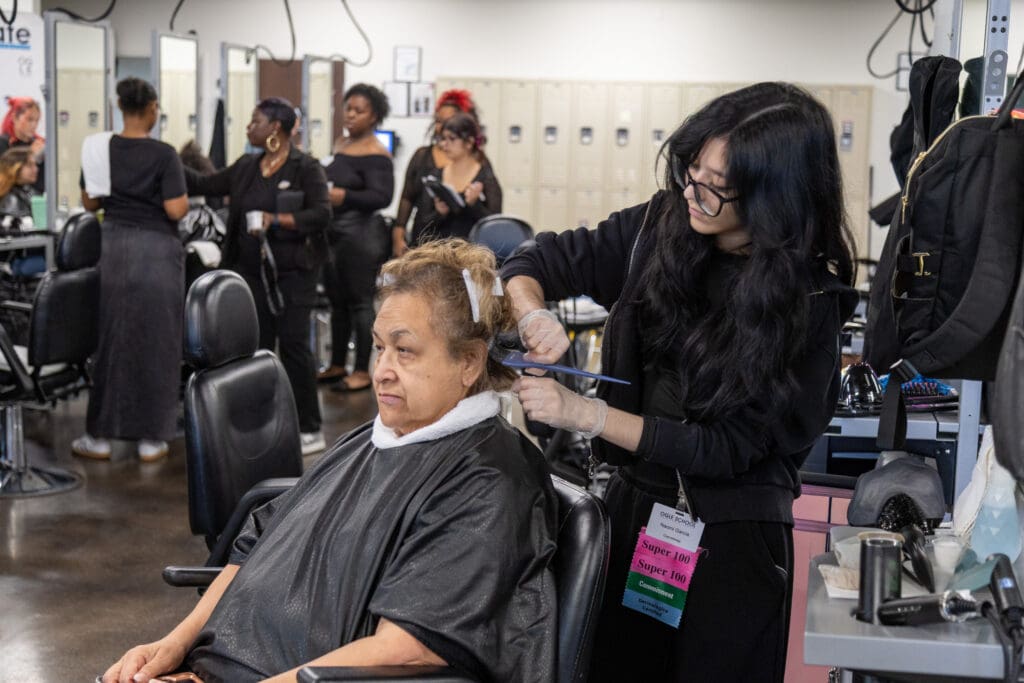
Ogle School’s esthetics program is built around hands-on training, so you’re practicing skin care techniques on real clients in a supervised, salon-modeled setting well before graduation. That kind of practical repetition helps build the confidence you’ll need once you’re working independently.
Beyond technique, the program also includes professional development through a few signature offerings:
- Prosper U covers the business side of the industry, from client relationships to building a personal brand.
- The Vitality Project supports physical and mental wellness during the program.
- Ogle School Talent connects graduates with career support resources, without any promise of a specific job outcome.
Ogle School offers esthetics training at several Texas locations, including Dallas, North Dallas, Arlington, Fort Worth, Hurst, Denton, San Antonio, and the Houston area, with campuses in North Houston and Sugar Land.
Start Your Esthetics Career in Texas
Understanding Texas licensing requirements before you enroll sets you up for a smoother path to becoming a licensed esthetician. From the 750 required training hours to the written and practical exams, each step exists to make sure you’re ready to work safely and confidently once you’re licensed.
If you’re ready to explore esthetics education, Ogle School’s Texas campuses are a solid place to start. Our admissions process can walk you through enrollment, and financial aid resources are available for those who qualify.